
Technical development
First touch, receiving, passing, dribbling, finishing, 1v1 actions, and ball mastery are coached in situations that require a decision—not only in isolated repetition.
The PlayerFlow program
PlayerFlow is a supplemental individual-development environment for youth soccer players. It does not replace a club team. It gives the individual player clearer priorities, direct coaching attention, and a process for seeing whether the work is transferring to the game.
PlayerFlow Chicago
Individual player development for ambitious youth soccer players.
What PlayerFlow is
A player can work hard in a team environment and still need more individual attention. PlayerFlow begins with the question a team setting cannot always answer in depth: what does this player need next?
An integrated process of evaluation, planning, small-pod coaching, observation, video where useful, reporting, and reassessment. Each part should inform the next.
A club replacement, a mass-group academy, a camp, or a promise of instant results. It is a deliberate layer of support alongside the player’s existing soccer environment.
The development cycle
The plan is not a fixed template. It changes as the player’s needs, game understanding, and habits change.
01
Begin with an in-person evaluation or match clips to understand technical actions, decision-making, movement, habits, and current needs.
02
Create a focused initial plan. The aim is not to fix everything at once, but to work on the few priorities most likely to move the player forward.
03
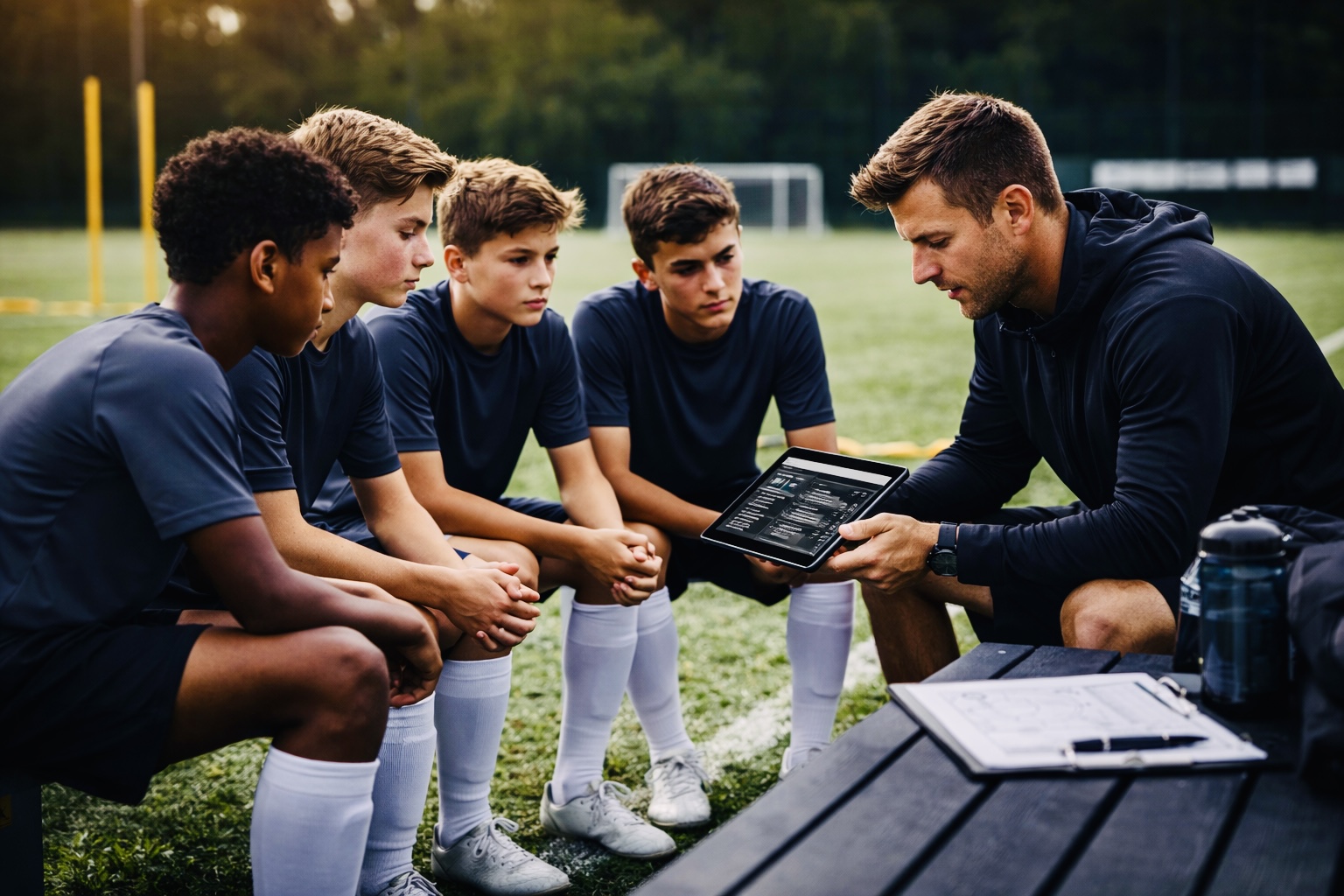
Coach in small development pods where repetition includes teammates, opponents, pressure, combination play, and decisions.
04
Use coach observations, reports, video when useful, and reassessment to identify what is changing.
05
Update the next priorities as the player’s needs and evidence change.
What the work addresses
First touch, receiving, passing, dribbling, finishing, 1v1 actions, and ball mastery are coached in situations that require a decision—not only in isolated repetition.
Players learn to scan, recognize pressure and space, use body orientation, move with timing, and make better choices in changing game situations.
Movement quality, speed, agility, coordination, mobility, and workload awareness are considered where relevant to the player’s development plan.
Coachability, accountability, communication, confidence, consistency, and independence matter because development has to carry beyond one session.
The 4:1 environment
Where applicable, PlayerFlow pods are capped at four players per coach. That keeps feedback specific while preserving the passing options, opponents, competition, communication, and transition moments that 1:1 work cannot fully reproduce.
What families receive
The exact format should fit the player and program phase, but communication is part of the development system—not an afterthought.
The first months
Early work often makes a player more aware of what they need to improve. That is progress, not a setback. The goal is to make better habits and decisions more repeatable over time, then update the work as the player is ready.
Program questions
PlayerFlow is designed for committed youth players and families seeking a clearer individual-development process alongside club soccer.
No. An evaluation is a starting point for understanding fit and next steps. Enrollment, pod placement, and scheduling details should be confirmed directly with PlayerFlow.
Cadence is not published as a universal promise because the right plan depends on the player, current commitments, and available program structure.